

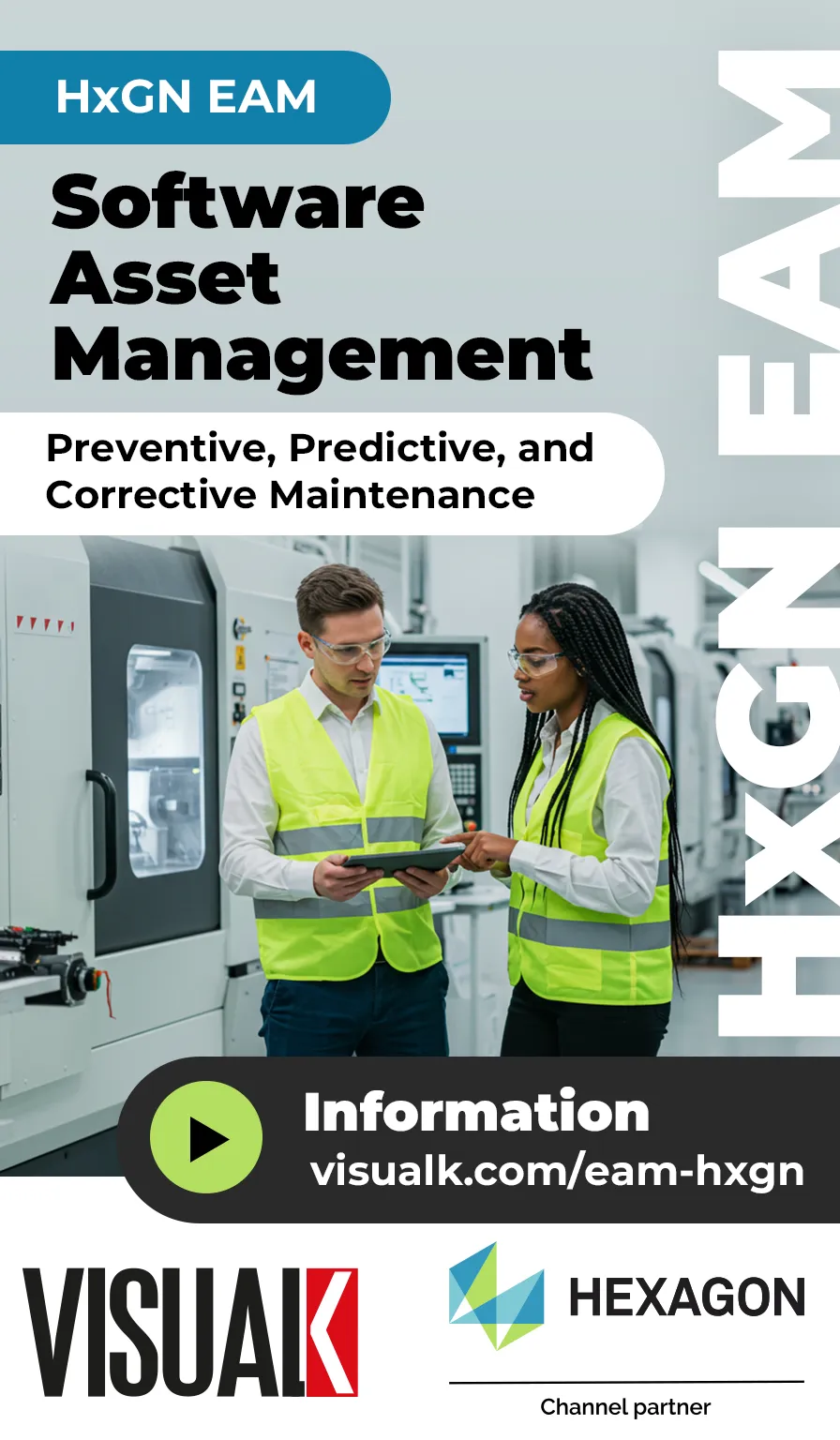
Asset Maintenance: Supporting Customers on the Road to Reliability
Visual K and Octave Attune EAM for Asset Maintenance
In most work environments, it is common to find a maintenance department. Whether responsible for facilities, machinery, computers, or office equipment, organizations continually look for ways to improve how their assets perform—helping them fail less often, last longer, and contribute more value to the business.
Visual K has been helping organizations across different industries track their maintenance activities and identify opportunities for improvement.
Founded in 1998 by Rene Nazario, Visual K designs solutions around customer needs and policies. Our team supports customers throughout the implementation process, from solution design to go-live and ongoing support. We also help teams develop the knowledge needed to use their tools effectively.
Octave Attune EAM, formerly HxGN EAM and previously Infor EAM, is part of that approach to enterprise asset management. Together with implementation services and the appropriate integrations, it helps connect asset information with maintenance processes.
The Road to Reliability Starts with Reactive Maintenance
When it comes to maintenance, organizations often recognize several stages along what we can call the “road to reliability.” As companies gain experience, their asset management practices develop as well.
The first response seems obvious: when a machine breaks, you fix it. However, when this becomes the main maintenance strategy, technicians can spend much of their time responding to breakdowns. Just as one machine is repaired, another important asset may fail—sometimes at the most critical moment.
This approach is commonly called reactive maintenance, with technicians frequently “putting out fires.”
Many companies establish a process for reporting breakdowns through work requests in their EAM system. This provides a way to document a problem and initiate the maintenance response.
Unexpected failures will not disappear entirely. However, organizations can take steps to reduce their dependence on emergency repairs.
Did you change the oil? Did you check the fuses? Are fluid levels correct? Are pressure and temperature readings within the expected operating range?
These are some of the questions that begin to emerge as an organization develops a preventive maintenance approach.

Building Preventive Maintenance Habits
Preventive maintenance involves scheduling activities before a failure occurs, using equipment documentation, operating requirements, and maintenance experience to determine what needs to be done and when.
A familiar example is changing the oil in a vehicle at specified time or mileage intervals. The work is performed even when the vehicle appears to be operating normally.
The same principle applies to industrial assets. Manufacturers may recommend inspections, lubrication, adjustments, and component replacements that cannot be justified by visual appearance alone.
As maintenance teams become more familiar with their equipment, they also identify patterns related to operating hours, cycle counts, usage frequency, or other measurements specific to each machine.
These observations can help refine preventive maintenance schedules and identify additional tasks. Any changes to manufacturer recommendations should be evaluated carefully against the asset’s operating conditions and technical requirements.
Experienced technicians play an important role in this process. Their observations, combined with documented maintenance history, help turn individual knowledge into information the wider team can use.
Moving Toward Condition-Based Maintenance
Another approach is condition-based maintenance, where maintenance decisions respond to the observed condition of an asset.
Monitoring systems can alert personnel when readings move outside defined parameters. In the original example, a facility monitors atmospheric CO₂ levels and activates alarms when a threshold is exceeded.
The immediate safety response must follow the facility’s established procedures and protective systems. EAM can support the maintenance follow-up by recording the event and organizing the work needed to investigate or address the issue.
With the appropriate integration and configuration, a condition trigger can initiate a work order and capture the time of the reading.
Rather than creating an empty work order, the workflow can use a predefined template with a description such as “Atmospheric Gas Level Exceeded—CO₂,” together with relevant activities, checklists, and instructions.
Different conditions can be associated with different responses. The objective is to connect the information captured by monitoring systems with a structured maintenance process.
Using Data to Support Predictive Maintenance
Predictive maintenance builds on the use of equipment data to identify patterns that may indicate developing problems.
Historical measurements, operating behavior, maintenance records, and current conditions can help teams assess the likelihood of a failure or identify when further investigation is needed.
Artificial intelligence and other analytical methods may support this process. However, predictive maintenance does not mean knowing with certainty exactly when a machine will fail. Its usefulness depends on the quality and relevance of the data, the analytical approach, and the ability to act on the findings.
Operating context matters, too.
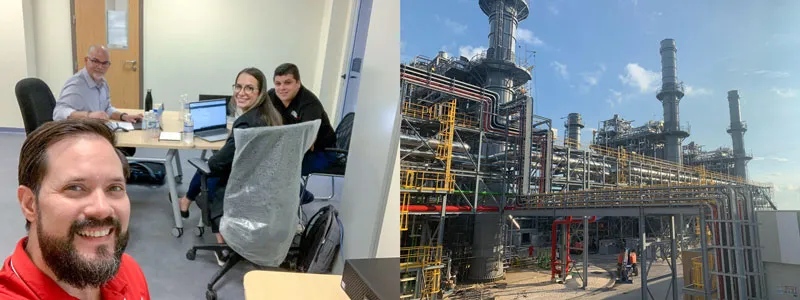
For example, one of Visual K’s customers operated a power plant in the Caribbean, close to the shoreline. The customer found that the equipment required a more demanding maintenance approach than initially expected because local environmental conditions differed from those assumed in the original maintenance recommendations.
That experience illustrates why maintenance decisions should consider not only equipment specifications but also the environment in which the assets operate.
AI and the Internet of Things (IoT) can raise questions about cost, integration, and organizational change. A practical approach is to begin with a clearly defined maintenance problem and determine what information and capabilities are needed to address it.
Potential benefits include fewer unexpected interruptions, better-informed maintenance decisions, and improved use of asset life.
Supporting Reliability at Every Stage
No matter where your organization is on the road to reliability, asset management software can help bring greater structure to maintenance information and activities.
Reactive, preventive, condition-based, and predictive approaches do not have to be mutually exclusive. The appropriate combination depends on the assets involved, their operating context, and the consequences of failure.
A computerized maintenance management system (CMMS) or enterprise asset management (EAM) platform can help teams document failures, organize maintenance work, and track associated costs. Connections with ERP, monitoring, and other business systems can further support the flow of information.
Visual K has worked with customers using EAM alongside other solutions to reduce duplicate data entry and support documentation and reporting requirements.
With Octave Attune EAM, the objective remains the same: give teams useful information and organized processes to support their maintenance and reliability goals.
Contact Visual K to explore how Octave Attune EAM could support your organization’s next steps on the road to reliability.


